
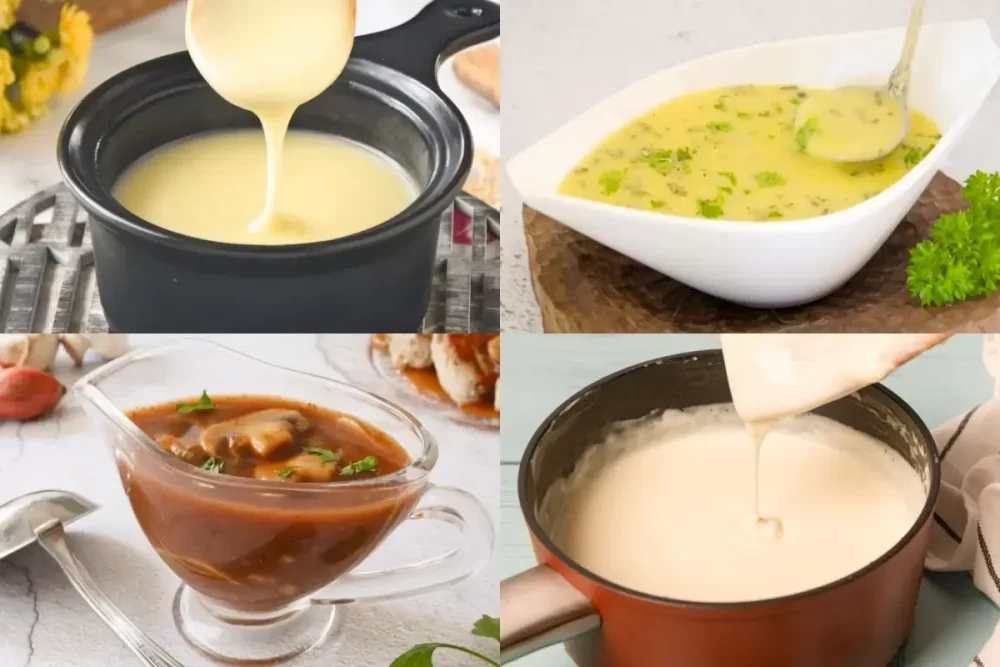
In French cuisine, a sauce is never just an addition—it is the soul of the dish.
To truly understand the essence of French cooking, you have to understand sauces. They are what bring harmony to a plate, what connects flavors, and what transforms simple ingredients into something memorable. A perfectly cooked piece of meat or vegetables can be delicious on its own, but in French cuisine, it is the sauce that elevates it into an experience.
This philosophy is deeply rooted in tradition. French cooking is built on what are known as the mother sauces, a concept formalized by chefs like Auguste Escoffier, who helped define the foundations of classical French cuisine. These sauces—such as béchamel, velouté, espagnole, hollandaise, and tomato—are not just recipes, but building blocks. From them, countless variations are created, each bringing its own personality to a dish.
But beyond technique, sauces represent something deeper: care.
A good sauce takes time. It requires patience, attention, and intuition. It asks you to taste, adjust, and refine. In a world that often rushes everything, making a sauce is an act of slowing down—of being present in the kitchen.
It is also an act of generosity. In French culture, cooking is a way of expressing love, and a sauce is often the final touch that shows that extra level of intention. It is the difference between feeding someone and truly taking care of them.
At its core, French cuisine teaches us that greatness doesn’t always come from complexity, but from depth. A well-made sauce can turn the simplest ingredients into something extraordinary—not by overpowering them, but by bringing out their best.
And maybe that is the real beauty of it:
a sauce doesn’t hide the dish… it reveals it.